Current Challenges
- Limited liquidity in reinsurance and ILS securities
- Costly to structure
- Constrained and static reinsurance supply with heavy capital requirements
- Lengthy and expensive arbitration processes
- Massive amounts of unplaced risk
 Riskify
Transform Turbulence into Clarity and Transfer Risk in Real-Time
Explore Riskify
Illustrative portfolio film. A still is available before playback.
Forest House faces wildfire exposure. River House adds flood exposure. Harbor Exchange adds hurricane exposure, and Alpine Lodge adds snow exposure. Their labeled records remain visible as they become four pool positions and form one illustrative bundle. The ending reveals the actual Active Bundles interface. The fictional properties are separate from the demo’s simulated bundles and allocations.
Explore the technologyRiskify is a digital marketplace that uses AI and blockchain technology together to create a programmable infrastructure for efficient, real-time risk transfer.
Our platform connects the P&C risk transfer ecosystem—from (re)insurers and brokers to ILS managers and the wider capital markets. The result: increased risk-adjusted returns, reduced catastrophe exposure, and a novel asset class for investors.
See How the Platform Works
Riskify interweaves 5 layers of technology to create a seamless, end-to-end risk transfer platform.
Convert real-world catastrophe risk into digital tokens with embedded parameters and compliance integration.
Aggregates and manages catastrophe risk across multiple dimensions using advanced statistical models.
Facilitates secure and efficient transfer of risk tokens between participants and counterparties.
Provides deep liquidity pools and automated market making for risk tokens.
Manages protocol parameters, risk models, and community governance.
Digitize catastrophe risk into tradeable instruments
Aggregate and manage catastrophe risk exposure programmatically
Transfer risk from one party to another
Provide liquidity for real-time trading and settlement
Manage and automate legal and regulatory compliance
Complete risk transfer processes in minutes instead of weeks, with automated workflows and instant settlements.
Connect with a global network of reinsurance capacity providers through our unified marketplace.
Clear pricing, real-time risk assessment, and automated settlements for complete visibility.
Advanced Automation: Streamlined processes for risk assessment and transfer
Digital Risk Pools: Flexible participation options for risk transfer
Intelligent Pricing: AI-powered risk assessment and market-based pricing
Secure Infrastructure: Enterprise-grade security and compliance
Instant Settlements: Automated payment processing and risk transfer
Each node represents a specific token type. Select a token to learn more about its role in the token encoding process.
Standardized, fungible ERC-20 tokens representing $1,000 of catastrophe risk for a specific peril. The base unit for risk transfer and the foundation of the Riskify ecosystem.
Non-tradeable ERC-721 tokens tied to real-world properties. Used for tracking, reporting, and validating risk exposure and event impacts.
ERC-1155 tokens representing structured pools of PSCTs. Used to create diversified, capitalized risk pools for reinsurance and investor participation.
ERC-20 tokens representing index-linked catastrophe contracts. Tradable derivatives for hedging and capital market participation.
ERC-1155 tokens for collaborative risk sharing across multiple pools and insurers. Enables diversification and dynamic risk rebalancing between participants.
Composite ERC-1155 tokens that package exposures across multiple tiers, perils, or pools. Simplifies participation and enables passive investment.
We begin with two primitives: the Peril-Specific Catastrophe Token (PSCT) and the Building Token (BT). On the Riskify platform, the PSCT serve as the base unit of risk, representing $1,000 of a peril exposure. We track states of events and PSCT issuance through our second primitive, the non-tradable Building Token (BT) that tracks real assets.
To create tokenized reinsurance structures, we collate PSCT together to make tradeable Risk Pool Tokens (RPTs). RPTs behave like a traditional reinsurance contract with set attachment points based on number of burned PSCTs in the pool. To make the environment more liquid, we introduce Peril Activated Derivatives (PAD). These are tradable derivatives for hedging and enhanced market participation for non-insurers.
Now how can we make risk sharing more collaborative so that offers are more enticing for counterparties? On the Riskify platform, PSCT and RPT can be used as building blocks to create Cross-Pool Tokens (XPT) for collaborative risk sharing and distrubution. It is analogous to an insurance reciprocal but tokenized and positions tradeable.
To ease participation and reduce market fragmentation, unmet positions of RPT and XPT can be bundled together into Bundle, a composite token for diversified participation akin to an index fund. Just as bundles can be forked from RPTs and XPTs, the Riskify ecosystem allows users to fork these assets into derivatives called PAD can be used to hedge against the risk of a specific peril.
Asset tokenization flow: BT branches into PSCTs; RPTs and XPTs can create PADs for enhanced risk management; RPTs and PSCTs can create XPTs for collaborative risk sharing; RPTs and XPTs together can flow into Bundle.
Whitepaper published, initial smart contracts developed, and core team assembled. Data oracles and enforcement mechanisms established.
First platform iteration with UI/UX, trained risk pooling models using ConvGNNs, and pilot market maker with PPO-based RL.
Smart contract refinement, proof-of-solvency ZKP circuits implementation, and enhanced security protocols.
PSCT factory contracts created and audited for earthquake, wind, snow, and fire risk categories.
Advanced pooling mechanism enabling risk abstraction without direct underwriting exposure through PSCTs.
Platform launches on Arbitrum Sepolia testnet for community testing and feedback collection.
AMM and graphical models trained on testnet data for automated pool matchmaking and optimization.
Strategic partnership with Florida Citizens and Hurricane Catastrophe Fund for real-world pilot testing.
Proposed mainnet launch, subject to technical qualification, professional review and applicable permissions.

Founder & CEO
Former data science professional who grew up in an (re)insurance family. Passionate about leveraging blockchain technology to solve real-world financial challenges.

Co-Founder & Chief Strategy Officer
Leader of large-scale catastrophe response operations, excelling in disaster management, strategic partnerships, and team development while driving innovation and results.
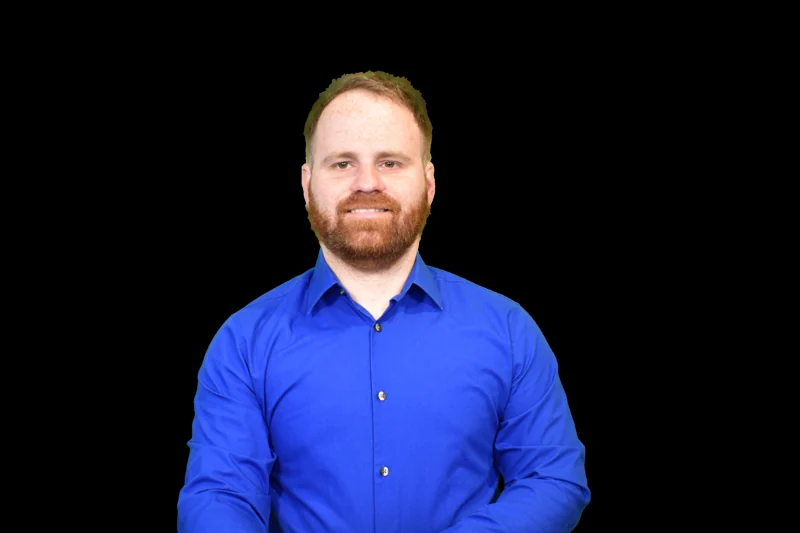
Co-Founder & Chief Sales Officer
Proven leader in catastrophe insurance operations, excelling in claims strategy, reinsurance, and organizational transformation while driving efficiency, resilience, and innovation.